Why Do Some Events Leave a Deeper Impression Than Others?
You may have attended dozens of year-end parties and hundreds of company conferences. But only a handful of events truly stick in your memory. The question is: why?
Psychological research on event memory shows that people remember emotional peaks and endings — the Peak-End Rule. This has a clear practical implication for organizers: you need at least one deliberately designed emotional peak, and you must finish on a high.
Music and lucky draws, when combined thoughtfully, are the two most powerful tools for engineering those emotional peaks.
The Psychology of Music at Events
Music isn't just background — it's the emotional architecture of a space. When people walk into a venue with the right music, the brain immediately begins classifying the situation: is this a fun, relaxed, or formal space?
Tempo directly influences heart rate and mental state. Fast-tempo music (120–140 BPM) raises energy and excitement. Slow-tempo music (60–80 BPM) creates relaxation and connection. The deliberate transition between these two modes is one of the most powerful emotional-management techniques in event design.
Music and Lucky Draws: The Emotional One-Two Punch
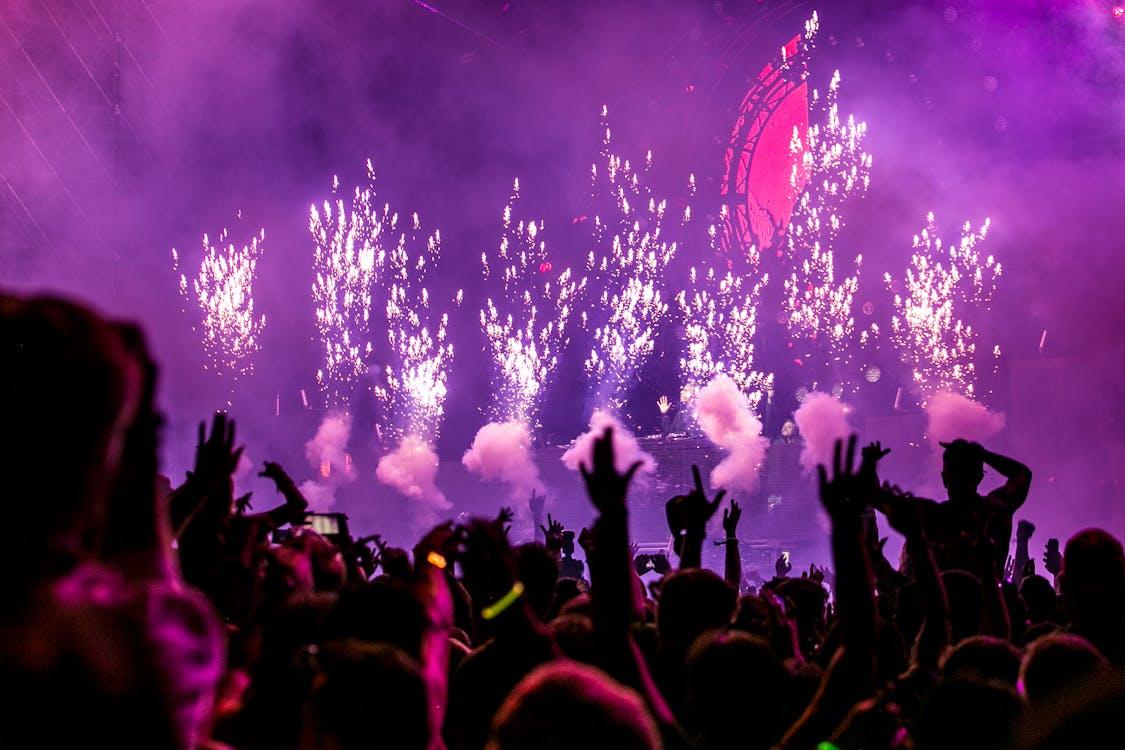
Picture this scenario: the lucky draw begins with its own signature jingle, animations light up the LED screen, and stage lighting shifts. The music builds steadily with each spin, reaching a crescendo at the exact moment the winner's name appears. Then — a beat drop and confetti. The audience erupts not because they were told to, but because the sound and visuals pushed them there naturally.
This isn't magic. This is design.
sequenceDiagram
    participant B as Organizer
    participant M as Music System
    participant S as Lucky Draw Screen
    participant A as Audience
    B->>M: Play arrival music (60-80 BPM)
    M->>A: State: relaxed, socializing
    B->>M: Switch to dinner music (70 BPM)
    M->>A: State: comfortable, connected
    B->>B: Prepare lucky draw segment
    B->>M: Build-up music (gradually 80→120 BPM)
    B->>S: Activate LED lucky draw interface
    M->>A: State: excited, anticipating
    S->>A: Names scrolling quickly on screen
    M->>A: Peak — music hits its high point
    S->>A: Winner's name is revealed
    M->>A: Beat drop + sound effects
    A->>A: Emotional peak — applause and cheers
    B->>M: Celebration music (upbeat)
    A->>A: State: elated, satisfied
    B->>M: Outro music (fading down)
    A->>A: Event ends on an emotional high
Sample Event Timeline Integrating Music and Lucky Draws
Here is a timeline framework for a year-end dinner of 200 guests, running 3 hours:
- 6:00–6:30 PM — Arrival & Reception: Light instrumental music at 70 BPM. Guests arrive, check in, and find their seats. Keep stimulation low.
- 6:30–6:45 PM — Opening Ceremony: Music rises to 90 BPM as the MC takes the stage. Welcome remarks from leadership. Energy builds gradually.
- 6:45–8:00 PM — Dinner: Background music at 65–75 BPM. Creates a comfortable atmosphere for mingling. Music should not overpower conversation.
- 8:00–8:30 PM — Entertainment & Games: Interactive music. If using ListenWithMe for this segment, guests can vote for songs from their phones — creating genuine engagement.
- 8:30–9:00 PM — Lucky Draw: This is the emotional climax. Use a dedicated build-up track for each draw. Run quaysotrungthuong.vn in LED full-screen mode. Each prize is its own standalone emotional peak.
- 9:00–9:30 PM — Closing & Photo: Celebration music. Group photos. Guests leave in high spirits.
ListenWithMe for the Interactive Music Segment
If you want the music portion to be truly interactive — rather than just playing background tracks — ListenWithMe (together.fm) offers an engaging approach: everyone in the same room listens to music together in real time, can vote for songs, and can see what others are currently listening to.
In an event setting, this feature lets guests participate in the event playlist, creating a sense of ownership and connection — rather than passively sitting through music the organizers chose for them.
Conclusion: Design Emotions, Not Just Schedules
A successful event is not one that simply runs on time. It's an event where the audience feels something — and wants to come back. Music and lucky draws are the two most powerful tools you have for designing those emotional moments. Use them with intention.